• The new WDWMAGIC iOS app is here!
    Stay up to date with the latest Disney news, photos, and discussions right from your iPhone. The app is free to download and gives you quick access to news articles, forums, photo galleries, park hours, weather and Lightning Lane pricing. Learn More
  • Happy Holidays from WDWMAGIC

    Wishing you a season filled with warmth, time with the people you care about, and a little extra Disney magic. Thanks for being part of the WDWMAGIC community. We appreciate you reading, sharing, and talking Disney with us all year.

  • Welcome to the WDWMAGIC.COM Forums!
    Please take a look around, and feel free to sign up and join the community.

Splash Mountain re-theme announced

Status
Not open for further replies.

Disneyson

Well-Known Member
Again assuming that Brer Rabbit is meant to be Uncle Remus during his days as a slave, why is Brer Rabbit not played by James Baskett? It's not like he couldn't do a Johnny Lee like "young" voice as proven by him doing the additional Brer Rabbit laughing in the Laughin' Place sequence. Why does he only play the villain Brer Fox, which he should have the least connection to? Why does Brer Fox have a stereotypical Amos n' Andy fast talking African American voice if he's supposed to represent a white character?

Golden Age Disney was far from subtle, if the intention was that Brer Fox and Brer Bear were supposed to be real life people that Uncle Remus knew, I'd think there'd be a bigger hint like Uncle Remus doing an imitation of these unseen characters voices and he uses the same voices as Brer Bear and Brer Fox or at the end of the movie Uncle Remus meeting them again and they're played by the same actors as the cartoon characters (Wizard of Oz style).

Walt's whole reason for making SOTS was to make a cheaper, safe feature without making it a package film. The live actions parts are there for, A. To recreate the African American storyteller format of the book B. Doing the majority in live action was cheaper than an entire animated feature C. It allowed Walt to experiment with live action something he was itching to do.

I feel like if Walt was even thinking about the animated portions possible connections to slavery, I think he tried to stay far way from it. Having the dumb loser villain characters meant to be white slave catchers could've gotten Walt labeled as a progressive (and we all know what was only a few years away) and angered Southern movie theaters enough to not show the film.

I just don't see it being intentional in the Disney version? The original versions of the tale told by slaves? Probably. Joel Harris when he was wrote the tales down? Maybe. I really think Walt was trying to stay far away from making it a historical film (which is why there's no sign of a year and it only hints at being post Civil War) while still giving it a nostalgic feeling of the 19th century South.

Basically Walt wanted to have his cake and eat it too.

I think the voice choices are absolutely fair points to make, and I don’t disagree with your thoughts on Walt’s reasoning for making the film. I think the important part is the last part: that Walt’s intention might have been to distance himself from being historical, but also that he was trying to conjure “nostalgic 19th Century South”.

Anywho, I wasn’t really asking about Walt’s intention - which is a valid point in many discussions about the film - I was mostly just pointing out what I think is a valid modern reading of the film and how it could easily be seen as problematic. The problem for me is that, even if the story is removed thrice from it’s source, I am able to see the parallels between the story of Splash Mountain and the story of a runaway slave learning the lesson of returning “home” and not getting into trouble — literally, back to a dangerous home (a briar patch) that may be thorny, but will protect you.

The thing sort of is, modern riders of the attraction must make judgement calls on what they know. Many will not know SotS, aside from that it’s banned MAYBE. But you can piece a narrative together JUST from the ride, too. And, while it might not have been intentional in the Disney film (though I think we agree to disagree a little), evidence from at at LEAST the source material can back up this narrative.

EDIT: One more thing about the film (we really ought to focus on the attraction, I know, and it isn’t really the important part of the discussion,) but I suppose the main question is, in terms of the film, If Uncle Remus doesn’t speak from life experience, where/how does Uncle Remus create these stories? Is not the implication that as an older person speaking to a child, he is recounting lessons he finds important or else has learned throughout his life? I won’t re-post the full text here aside from a link to the script, but the placement of Uncle Remus “coming back” and Bre’r Rabbit “coming back” seems to be drawing a big, obvious parallel. I would look at the text from pages 3-4. To me, it's not very subtle at all, as if he is seeing himself in Bre’r Rabbit, but also passing the mantle onto this kid.

 
Last edited:

Rich Brownn

Well-Known Member
I think the voice choices are absolutely fair points to make, and I don’t disagree with your thoughts on Walt’s reasoning for making the film. I think the important part is the last part: that Walt’s intention might have been to distance himself from being historical, but also that he was trying to conjure “nostalgic 19th Century South”.

Anywho, I wasn’t really asking about Walt’s intention - which is a valid point in many discussions about the film - I was mostly just pointing out what I think is a valid modern reading of the film and how it could easily be seen as problematic. The problem for me is that, even if the story is removed thrice from it’s source, I am able to see the parallels between the story of Splash Mountain and the story of a runaway slave learning the lesson of returning “home” and not getting into trouble — literally, back to a dangerous home (a briar patch) that may be thorny, but will protect you.

The thing sort of is, modern riders of the attraction must make judgement calls on what they know. Many will not know SotS, aside from that it’s banned MAYBE. But you can piece a narrative together JUST from the ride, too. And, while it might not have been intentional in the Disney film (though I think we agree to disagree a little), evidence from at at LEAST the source material can back up this narrative.

EDIT: One more thing about the film (we really ought to focus on the attraction, I know, and it isn’t really the important part of the discussion,) but I suppose the main question is, in terms of the film, If Uncle Remus doesn’t speak from life experience, where/how does Uncle Remus create these stories? Is not the implication that as an older person speaking to a child, he is recounting lessons he finds important or else has learned throughout his life? I won’t re-post the full text here aside from a link to the script, but the placement of Uncle Remus “coming back” and Bre’r Rabbit “coming back” seems to be drawing a big, obvious parallel. I would look at the text from pages 3-4. To me, it's not very subtle at all, as if he is seeing himself in Bre’r Rabbit, but also passing the mantle onto this kid.

I always thought he was explaining life lessons in a form a child would understand, not necessarily how he experienced them. (It also helps that Remus seems to be the only adults with both brains and the ability to relate to children)
 

dig311dug

Well-Known Member
are they planning on throwing out brer's statue too?

17608022615_06aab0466b_b.jpg
 

Brer Oswald

Well-Known Member
They'll probably replace it with Louie or one of the Country Bears.
The characters all come from roughly the same era. Minnie, Pluto, Goofy, Donald are all from late 20/early 30s. Chip and Dale, Dumbo, Pinocchio, And Brer Rabbit are From the 40s. They’d probably go with a Classic Disney film character with a presence in the park (Peter Pan, Dopey, Alice). Or, swap Rabbit for Rabbit and go Oswald.

But it’s Disney. It’s not unlike them to put a completely out of place character (like the Pig from Moana) there. They could also remove all of the statues. Or they could just leave it because taking it away would do nothing.
 

AdventureHasAName

Well-Known Member
I feel sorry for future generations who missed out on the golden era of disney world (exact era is debatable, but any time pre-magic bands/my magic plus). This company shouldn't even bear "Disney"'s name any longer.

I always consider Peak WDW to be August 1994. The Tower of Terror opened on July 22, 1994 and 20k Leagues closed on September 5, 1994. Frank Wells died in April 1994 and Eisner made a mess of almost everything parks-related after his death.
 
Last edited:

UNCgolf

Well-Known Member
I always consider Peak WDW to be August 1994. The Tower of Terror opened on July 22, 1994 and 20k Leagues closed on September 5, 1994. Frank Wells died in April 1994 and Eisner made a mess of almost everything parks-related after his death.

That's a good choice. I would love to be able to visit that 1994 WDW again -- especially if I could drop present day Animal Kingdom in as well, because it's a great park.
 

Phil12

Well-Known Member

Well, it took them awhile, but they have put a proper disclaimer on their racist movies. And please notice that the message is clear.
"These stereotypes were wrong then and are wrong now,” the warning reads. “Rather than remove this content, we want to acknowledge its harmful impact, learn from it and spark conversation to create a more inclusive future together. "

However, Song of the South is so racist, they still have the film tightly locked in the vault. Perhaps, now that TWDC has admitted that Walt was a racist, they will one day remove Song of the South from the vault and put a disclaimer on it as well. And put Sunflower back into Fantasia with a disclaimer. And do the same for the other objectionable content.

The re-theme of Splash Mountain is a great way to demonstrate their commitment to his issue and this new disclaimer is clear and unambiguous. They're taking the needed steps.

One step at a time.
 

Brer Oswald

Well-Known Member

Well, it took them awhile, but they have put a proper disclaimer on their racist movies. And please notice that the message is clear.
"These stereotypes were wrong then and are wrong now,” the warning reads. “Rather than remove this content, we want to acknowledge its harmful impact, learn from it and spark conversation to create a more inclusive future together. "

However, Song of the South is so racist, they still have the film tightly locked in the vault. Perhaps, now that TWDC has admitted that Walt was a racist, they will one day remove Song of the South from the vault and put a disclaimer on it as well. And put Sunflower back into Fantasia with a disclaimer. And do the same for the other objectionable content.

The re-theme of Splash Mountain is a great way to demonstrate their commitment to his issue and this new disclaimer is clear and unambiguous. They're taking the needed steps.

One step at a time.
Song of the South will never come out of the vault. Not because it is “so racist” or even remotely as racist as the films that got the content advisories. But because there is zero monetary gain to doing so. Peter Pan and Dumbo are significant IP to the company. They will never forget about them. Brer Rabbit just isn’t any more.

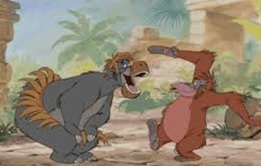
As for the advisories, well needed. However, advisories should be more specific than this low effort attempt. How are we roping Jungle Book in the same breath as Peter Pan? Where is the racism in Jungle Book? King Louie? Louie Prima is white, so the racism in assuming the character is a black stereotype doesn’t fall in Disney. It falls square on the viewer for making that assumption.
 
D

Deleted member 107043

And put Sunflower back into Fantasia with a disclaimer. And do the same for the other objectionable content.

I've been a Disney fan since childhood, seen Fantasia numerous times, including multiple viewings in the theater, and never knew about Sunflower until now. I flew to Youtube to see the censored scenes and my jaw is on the floor. Holy crap.
 

Phil12

Well-Known Member
Song of the South will never come out of the vault. Not because it is “so racist” or even remotely as racist as the films that got the content advisories. But because there is zero monetary gain to doing so. Peter Pan and Dumbo are significant IP to the company. They will never forget about them. Brer Rabbit just isn’t any more.

As for the advisories, well needed. However, advisories should be more specific than this low effort attempt. How are we roping Jungle Book in the same breath as Peter Pan? Where is the racism in Jungle Book? King Louie? Louie Prima is white, so the racism in assuming the character is a black stereotype doesn’t fall in Disney. It falls square on the viewer for making that assumption.
 

Brer Oswald

Well-Known Member
You just linked me an opinion piece that assumes the monkey’s are meant to represent black People with no other reasoning than “it’s obvious”.

The implicit bias in assuming that this connection is implied is itself the problem. The people who jump to this conclusion are the ones with the racist bias.
 
Status
Not open for further replies.

Register on WDWMAGIC. This sidebar will go away, and you'll see fewer ads.

Back
Top Bottom