Attractions becoming more reliable?Some changes some of the nitpickers will be happy with in the next week, but many are going to be nitpicking either way.
Nothing major, but positive tweaks.
Also, the Botanical beuaty of Celestial Park is realy coming in now. Loving that.
For those who do not know you can make Blue Dragon reservations now.

-
The new WDWMAGIC iOS app is here!
Stay up to date with the latest Disney news, photos, and discussions right from your iPhone. The app is free to download and gives you quick access to news articles, forums, photo galleries, park hours, weather and Lightning Lane pricing. Learn More -
Welcome to the WDWMAGIC.COM Forums!
Please take a look around, and feel free to sign up and join the community.
You are using an out of date browser. It may not display this or other websites correctly.
You should upgrade or use an alternative browser.
You should upgrade or use an alternative browser.
Universal Epic Universe (South Expansion Complex) - Now Open!
- Thread starter Bob Harlem
- Start date


Architectural Guinea Pig
Well-Known Member
- In the Parks
- No
My sister went on the DL Rise yesterday. Unlucky enough for the ride to break down while she was in line just once the entire day (as far as I know). Aside from that, after the ride reopened she reported that all effects were working, including the cannons! Operations are very smooth there.I can’t speak for everyone but whenever I ride the only thing that’s broken is the cannons.
Attractions becoming more reliable?
One would hope. One specifically in particular. But some show elements too is specifically partly what I was referring to.(atmospheric touches)
Last edited:

Agent H
Well-Known Member
If any attraction were to get big updates I would pick donkey Kong. That ride seriously needs more capacity.One would hope. One specifically in particular. But some show elements too is specifically partly what I was referring to.(atmospheric touches)
Agent H
Well-Known Member
I’m most interested to see if there will be anything about the fantastic beasts ride that was originally planned.

EricsBiscuit
Well-Known Member
One thing that EU can improve: the ice cream stand. They did not sell caramel sauce! This needs to be remedied immediately.

MrPromey
Well-Known Member
I don't thing Universal's goal was ever to stick it to Disney.Yes. This park will increase overall profit and attendance for universal but the parks impact on Disney is grossly overstated and honestly just comes off as wishful thinking. I predict this park will be the third most visited park in Orlando for the first 2 to 3 years and then will join the the ranks of the parks that have to be updated every couple of years to keep attendance as high as the other parks.
I'm pretty sure it's always been about building the strength of their own business. I don't know that they actually care about market share as long as they're doing well in their own right.

Of course they'd like to better develop their own bubble and lock people in with resort stays but there's a lot in Unviersal and Disney guests that don't overlap that much. This may change as Disney continues to dip their toes in the thrill/action ride category to some degree but that's still a space they're clearly not feeling overly threatened by or trying to dominate... yet.
I could see this peeling off a day of what might otherwise have been a Disney-only trip in some instances and that might give TDO some pause if that ends up being the case, especially when it comes to where those folks are staying.
I'd like to see it succeed and scare Disney into doing a better job. Whether it does or not is anyone's guess.
Last edited:

McMickeyWorld
Well-Known Member
I really enjoyed their analysis of Epic’s design — it’s probably my favorite channel at the moment.

Purduevian
Well-Known Member
Not sure how much they can do to expand DK capacity outside of better OPs and reliability. The coaster is a prototype and suffers capacity for it.If any attraction were to get big updates I would pick donkey Kong. That ride seriously needs more capacity.
My guess is they build a DK barrel flat ride, Jungle vine swing ride, ect. Give people something to do in the area that doesn't have a horrible wait.

Andrew C
You know what's funny?
I have mentioned some of this before, but when it comes to theme park vacations, our family has completely shifted from WDW to Universal. The value proposition at WDW just isn't there anymore for us. And that combined with what Universal can offer us (even before this new park), it is a no brainer. More value for us, better pre-arrival experience, and honestly a better experience while being there. So, while I will miss many things about WDW, I just cannot justify going there when I know we will have a better experience at Universal, and will not feel like I am being ripped off. And that doesn't even touch on the fact that my kids are starting to get older...I don't thing Universal's goal was ever to stick it to Disney.
I'm pretty sure it's always been about building the strength of their own business. I don't know that they actually care about market share as long as they're doing well in their own right.
Of course they'd like to better develop their own bubble and lock people in with resort stays but there's a lot in Unviersal and Disney guests that don't overlap that much. This may change as Disney continues to dip their toes in the thrill/action ride category to some degree but that's still a space they're clearly not feeling overly threatened by or trying to dominate... yet.
I could see this peeling off a day of what might otherwise have been a Disney-only trip in some instances and that might give TDO some pause if it ends up being the case, especially when it comes to where those folks are staying.
I'd like to see it succeed and scare Disney into doing a better job. Whether it does or not is anyone's guess.
I cannot be the only one who is going this way. Although I am also not exactly a typical theme park guest...

Stripes
Premium Member
Yes. This park will increase overall profit and attendance for universal but the parks impact on Disney is grossly overstated and honestly just comes off as wishful thinking. I predict this park will be the third most visited park in Orlando for the first 2 to 3 years and then will join the the ranks of the parks that have to be updated every couple of years to keep attendance as high as the other parks.
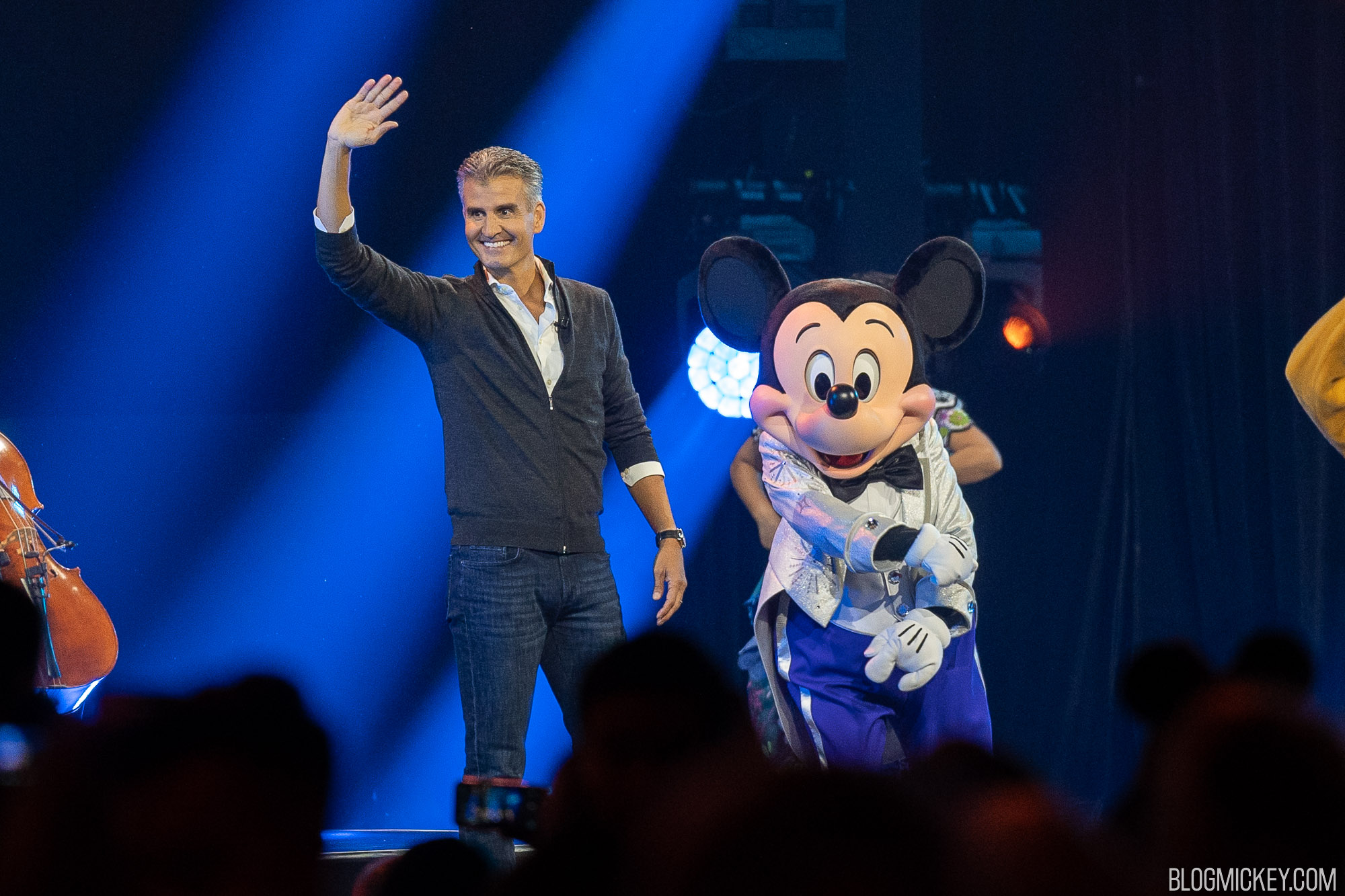
D'Amaro: Epic Universe Will Not Cannibalize Walt Disney World Visitation
Disney Experiences Chairman Josh D'Amaro was recently asked about Universal Epic Universe and the impact it'll have on Walt Disney World
 blogmickey.com

flynnibus
Premium Member
you aren't - and it's a train of thought in 'online theme park wars' that gets lost when people fight for their camps vs just consider themselves as customers.I cannot be the only one who is going this way
The products change... what made something good or bad in 2002 isn't necessarily the same in 2022.
What you experienced as a kid who was green and carefree is different from what you experience as an adult doing the organization and bill paying.
What your family needs or enjoys will evolve as the make-up of your family changes with age, growing up, growing older, etc.
TLDR - things evolve, both the product (like the WDW changes you mention) and you as a customer.
What made Disney so stand out for so many years was how the product managed to appeal to customers at various stages and could KEEP a customer engaged as they evolved.. so you got this generational cycle that built such loyalty. But they broke that cycle... and so it's not uncommon at all for evolving customers to find themselves stepping out of the loop.. or feeling out of place in the loop.

Sir_Cliff
Well-Known Member
I would be curious to know how true this has been during the lifespan of the parks and when/if it changed. My memory is that one of the issues with the Disney brand generally that was identified when Eisner took over is that it appealed to people when they were children, lost them when they became teenagers, and only regained them when they had children of their own. This was part of the logic for diversifying the options available at WDW and, on the studio side, creating Touchstone.What made Disney so stand out for so many years was how the product managed to appeal to customers at various stages and could KEEP a customer engaged as they evolved.. so you got this generational cycle that built such loyalty. But they broke that cycle... and so it's not uncommon at all for evolving customers to find themselves stepping out of the loop.. or feeling out of place in the loop.
Unless I am misremembering something, then, I would be interested to know when Disney transitioned to a point where they held customers throughout their life and then when that changed and what made it change. I wouldn't think it would be pricing so much, as that is more pricing certain consumers out entirely rather than, say, making the parks less appealing to teenagers. As a brand, I would suggest that Disney is actually more all-ages now than it has ever been.

Baloo124
Premium Member
If that's the case, then who is to blame for poor sightlines in some areas of the park? Rachel Zegler or Gal Gadot?This is officially the new box office thread.
I would be curious to know how true this has been during the lifespan of the parks and when/if it changed. My memory is that one of the issues with the Disney brand generally that was identified when Eisner took over is that it appealed to people when they were children, lost them when they became teenagers, and only regained them when they had children of their own. This was part of the logic for diversifying the options available at WDW and, on the studio side, creating Touchstone.
Unless I am misremembering something, then, I would be interested to know when Disney transitioned to a point where they held customers throughout their life and then when that changed and what made it change. I wouldn't think it would be pricing so much, as that is more pricing certain consumers out entirely rather than, say, making the parks less appealing to teenagers. As a brand, I would suggest that Disney is actually more all-ages now than it has ever been.
I don't know if age appeal has changed much, but the post Baby Boomer and generations that did not have Davy Crockett to Cars are certainly spending less or moving on in numbers. There is more competition than ever.
The branding gap is much different and thinner than ever before.
Thing are reasonating very differently and Disney theme parks have been a mature project for a long time. There is naturally a bit of a decline before/if the cycle continues back.
Sir_Cliff
Well-Known Member
Do we know that from any specific data?I don't know if age appeal has changed much, but the post Baby Boomer and generations that did not have Davy Crockett to Cars are certainly spending less or moving on in numbers. There is more competition than ever.
The branding gap is much different and thinner than ever before.
Thing are reasonating very differently and Disney theme parks have been a mature project for a long time. There is naturally a bit of a decline before/if the cycle continues back.
I'm not trying to be difficult, but I feel like I have been hearing on forums like this about consumers turning away from Disney for a long time evidence of it never seems to emerge when it comes to cold hard numbers. I can imagine that the generation that came of age in Disney's less successful years which may have less of a connection with the brand, though those who came of age in the past 35-40 years seem to, if anything, be more rusted on than previous generations considering how successful Disney has been in selling 1990s nostalgia.
The point about the Disney theme parks being a mature product with little scope for growth seemed to be the internal thought, at least as regards WDW, for much of the 2000s-2010s. That seems to have changed, though, and what is the evidence they are declining in terms of their appeal?

Animaniac93-98
Well-Known Member
Unless I am misremembering something, then, I would be interested to know when Disney transitioned to a point where they held customers throughout their life and then when that changed and what made it change. I wouldn't think it would be pricing so much, as that is more pricing certain consumers out entirely rather than, say, making the parks less appealing to teenagers. As a brand, I would suggest that Disney is actually more all-ages now than it has ever been.
Social media and influencer culture changed how people engaged with Disney content.
Young people were monetizing and advertising the idea of Disney as a lifestyle/fashion trend. People were clamoring to have their own online business or identity to sell Disney directly or indirectly. As Disney became prominent on socials, other influencers and online personalities were looking to engage and benefit from the prominence of the brand and conversations.
It wasn't just wannabe travel agents and trip hacks, it became fashionable and desirable all over the internet to get that spirit jersey selfie in front of the castle. Video essays and nostalgia bait became a thing on YouTube. Non Disney brands wanted to license products to cash in on this trend.
All of this was largely independent of Disney's direct involvement or intentions. This wasn't Eisner reshaping the company, it was the company being reshaped by the culture.
Disney didn't coin the phrase "Disney adult", but they sure have benefitted from it.
flynnibus
Premium Member
I would be curious to know how true this has been during the lifespan of the parks and when/if it changed. My memory is that one of the issues with the Disney brand generally that was identified when Eisner took over is that it appealed to people when they were children, lost them when they became teenagers, and only regained them when they had children of their own. This was part of the logic for diversifying the options available at WDW and, on the studio side, creating Touchstone.
Well remember we are talking Consumer Sentiment and behaviors here - so this isn't going to be some sharp line or binary thing that applies universally. You're looking at changes at the macro level as individual experiences have shifted, or experiences have accumulated that result in changes in behavior.
As much as Disney has generally had that elementary age kid appeal.. they still managed to keep their hooks in people of all ages. Yes, you might find the teen in 1994 prefer the Hulk coaster over Mickey's Birthday celebration... but that kid would have still seen The Little Mermaid and probably recite some song chorus' too.
One element you can look at is things like DVC. DVC is largely sold on the idea of frequency and generational value to keep returning with your kids, their kids, etc. Customers have to believe they will want that kind of repeat visit to buy into the concept.. and people did it in droves. So one can argue customers were still convinced they thought they needed that, and their interest would be handed down to the next generation too.
I believe the shift is based in the "Disney Difference". The eroding of that difference is what broken the loyalty loop. The eroding of the difference comes in many different forms. The fact that the form of entertainment wasn't as unique as it once was.. because the format was copied... that society, information, and travel also changed so Disney wasn't the only way you experienced such things... and then you have the things Disney did to themselves that eroded their stand out customer service. Then you add in the product changes.. and all of this starts accumulating negatives or just missing "wows".. so customers become less and less fanatical about your brand or product.
This isn't about 'one change' or even individual changes -- it's about a company stalling, and then flat out forgetting what their special sauce was as they chased the numbers to meet their goals instead of counting on success coming from great product and experiences.
I think the Disney changes themselves were really ramping up the early 2000s and by the 2010s we were full on coasting on our reputation vs establishing greatness. In the generational game that means the people in their 30s have a different set of experiences than those in their 50s or 70s. It's a game that literally takes decades for the outcomes to play out because we're not talking hard cutoffs.. we're talking how customers want to lead their families and what impressions they want to leave in their children, etc.
Some may point to attraction openings in the period I'm talking about but this conversation isn't about individual rides, etc.. It's about what a Disney vacation was as a whole - not just Expedition Everest or something.
Register on WDWMAGIC. This sidebar will go away, and you'll see fewer ads.